

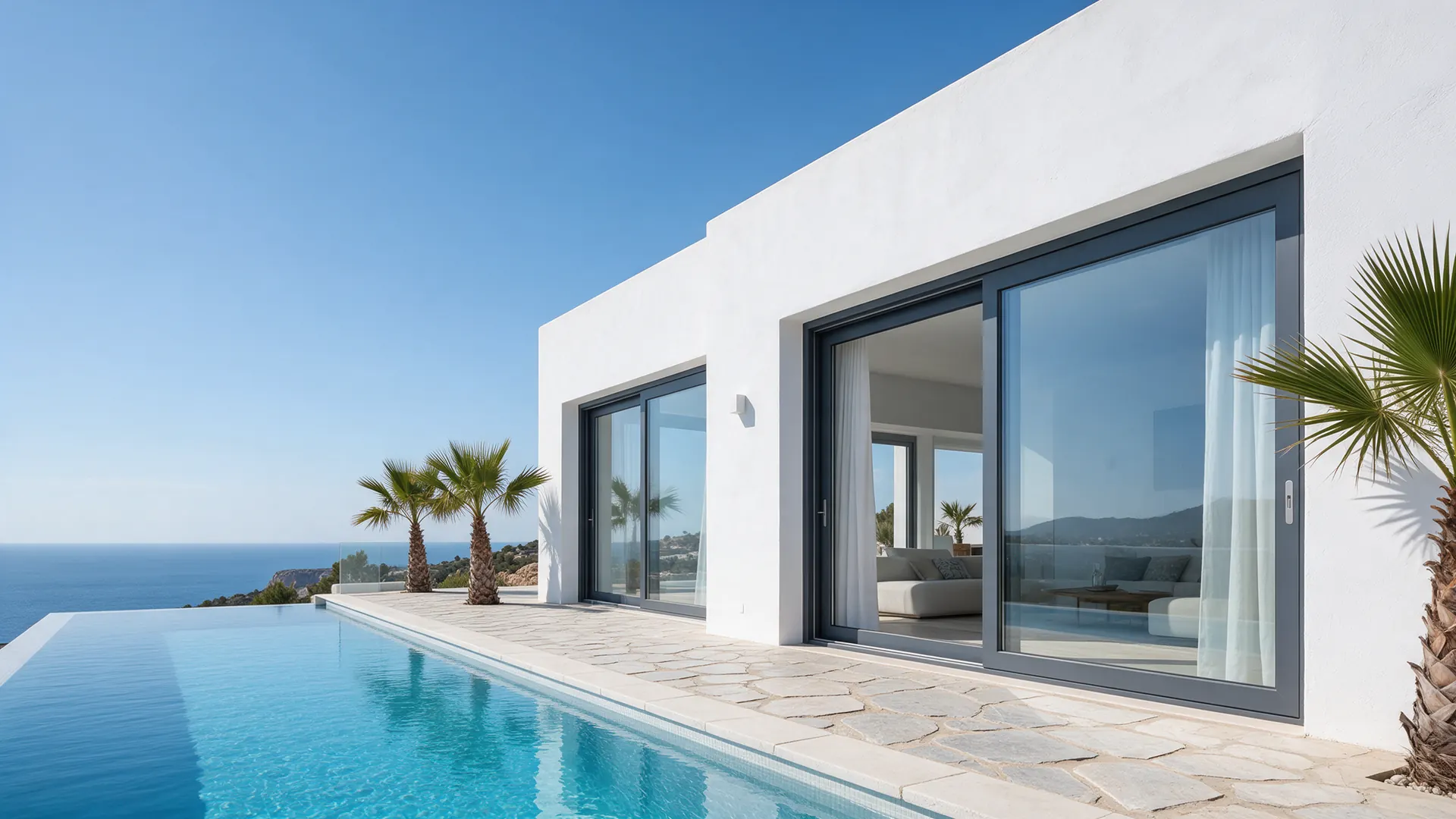
Cortizo A 84 Passivhaus windows
Two Passive House Institute-certified versions designed for homes with very low heating and cooling demand.
Two versions for two climates
A 84 Passivhaus 1.0is the stated warm-temperate version.A 84 Passivhaus HI adds special insulation foams for its stated cold-temperate climate specification.
Both use an 84 mm, six-chamber profile, with internal reinforcement and the specified insulation options. Glazing limits differ: 18–54 mmfor 1.0 and36–56 mm for HI.
For a Passivhaus or nearly zero-energy building, the project designer checks the full window specification, certification and installation details against the building’s energy calculation.
Stated Passive House Institute-certified versions
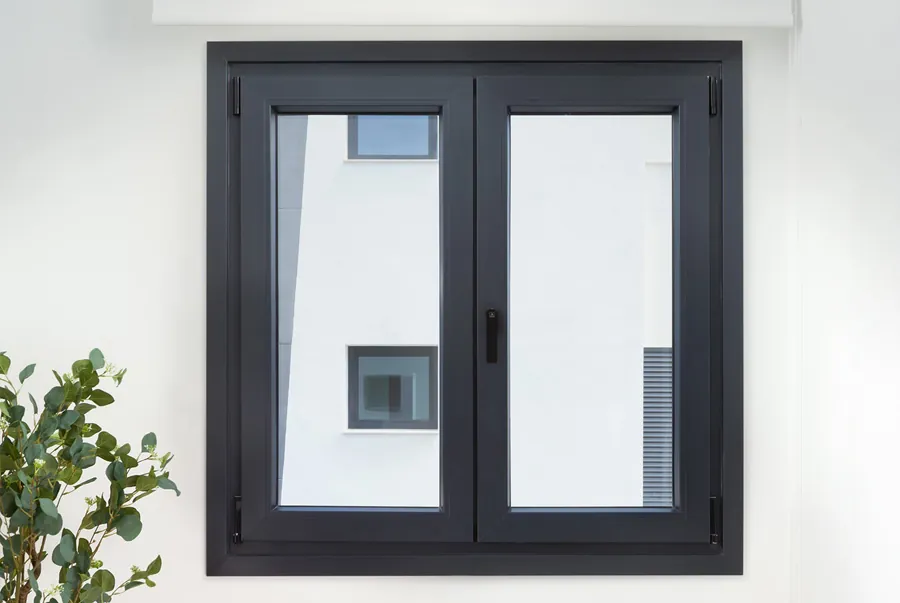
Passivhaus 1.0 or Passivhaus HI
Swipe to see every column →
| Feature | CortizoA 84 Passivhaus 1.0 | CortizoA 84 Passivhaus HI |
|---|---|---|
| Certification climate | Warm-temperate | Cold-temperate |
| Reference Uw from | 0.74 W/m²K | 0.66 W/m²K |
| Glazing | 18 to 54 mm | 36 to 56 mm |
| Maximum window sash size | 1400 × 2400 mm | 1300 × 2200 mm |
| Max. sash weight | 150 kg | 130 kg |
| Insulation detail | Optional thermally broken reinforcement | Special insulating foams |
What a Passivhaus window provides
Insulation at the opening
Suitable complete assemblies help reduce heat transfer around the window.
Lower energy demand
Window performance contributes to the whole building’s energy calculation.
Warmer inner surfaces
Surface temperature, ventilation and indoor humidity all influence condensation risk.
Acoustic glazing options
Reference acoustic insulation up to 46 dB with the stated glass.
Specified certification
Check the applicable Passive House Institute documentation for the version and project climate.
Choose your colour
The finish helps your window fit your facade and your interior. Explore popular colours and combinations: white inside, colour outside, wood effects and matt textures.
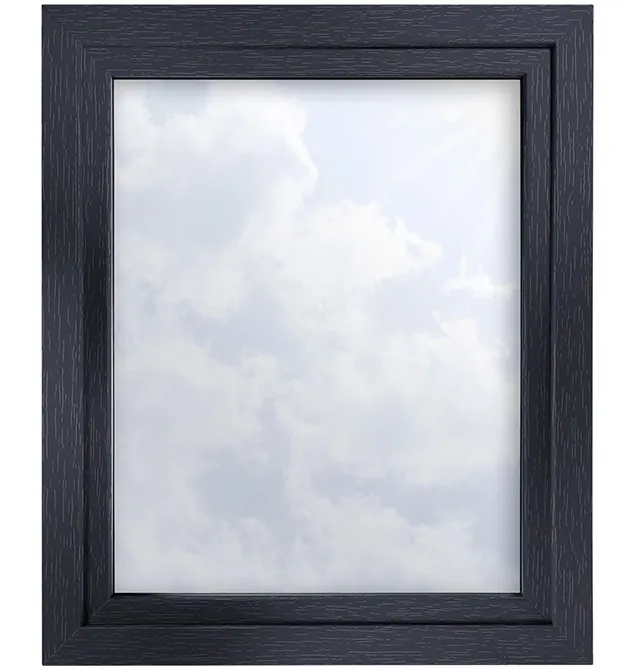
Anthracite grey
Choose a sample to see the window in that finish.
On-screen colours are indicative. Visit our showroom in San Vicente del Raspeig to see the actual samples before choosing.
The specifications at a glance
AEV test (2 sash, 1230 × 1480 mm)
| Permeability to air | Class 4 |
| Water tightness | E1500 |
| Wind resistance | Class C5 |
Thermal transmittance
| A 84 Passivhaus 1.0 | Uw ≥ 0.74 W/m²K |
| A 84 Passivhaus HI | Uw ≥ 0.66 W/m²K |
Acoustic insulation
| Both versions | Rw up to 46 dB |
Openings
| Interior | Hinged and tilt-and-turn |
| Depending on configuration | Tilt-and-slide |
Reference values according to Cortizo. Final performance depends on glass, hardware, dimensions and assembly. Non-contractual information.
Selecting windows for a Passivhaus project
Passivhaus construction combines low energy demand with stable indoor comfort. Windows play a central role through insulation, airtightness and careful control of thermal bridges.
Assess the complete window and installation
- Low thermal transmittance for the specified complete assembly.
- Appropriate airtightness and perimeter sealing.
- Inner surface temperatures assessed alongside humidity and ventilation.
- Applicable Passive House Institute documentation for the specific version and climate.
Passivhaus 1.0 and HI are separate specifications
The stated A 84 Passivhaus 1.0 warm-temperate versionquotes referenceUw from 0.74 W/m²K. A 84 Passivhaus HIuses additional insulation foams and quotesUw from 0.66 W/m²K for its stated cold-temperate specification. The designer checks the relevant assembly and documentation for the project.
Read moreShow less
High-performance windows in other homes
These systems can also be assessed for a home that will not seek Passivhaus certification. A well-specified assembly and careful installation can improve comfort, but the window alone does not certify the building or guarantee energy use or freedom from condensation.
Insulation and solar control in Alicante
In an Alicante project, summer solar gain, shading, airtightness and controlled ventilation need to be considered together. The glazing and opening orientation matter alongside the frame’s insulation.
The 1.0 and HI versions have different reference values and glazing limits. We work with the designer to select the appropriate window against the whole building’s energy calculation.
Frequently asked questions
Who should specify windows for a Passivhaus-certified building?
The project’s designer or Passivhaus specialist should check the complete window, applicable documentation and installation details. We provide the window information and coordinate its fitting specification.
Do highly insulating windows also help in summer?
They reduce heat transfer through the assembly. Summer comfort also depends on solar-control glazing, exterior shading, orientation and ventilation, so the complete design must be assessed.
Can A 84 Passivhaus windows be considered for a renovation?
Yes, subject to the opening and installation details. The project does not have to seek certification to consider the system, but the surrounding wall, perimeter seal and ventilation remain important.
What reference Uw values distinguish Passivhaus 1.0 and HI?
The stated 1.0 assembly quotes Uw from 0.74 W/m²K, and HI from 0.66 W/m²K. The versions have different glazing limits and insulation specifications; the project designer checks which assembly is appropriate.
Planning a Passivhaus or nearly zero-energy project?
We work with architects, developers and homeowners on the window documentation and installation specification.


